What Is The Temperature Of A Competition Pool?

Estimated reading time: 2 minutes

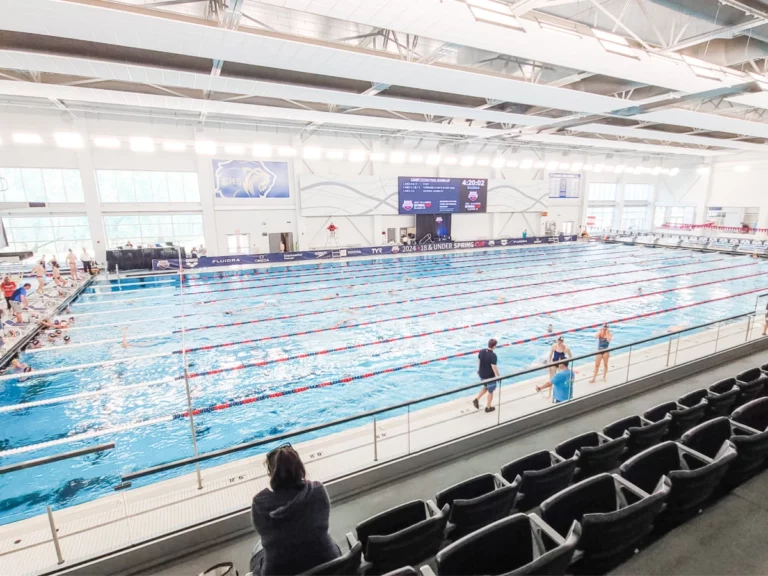
According to World Aquatics, the international governing body for competitive swimming formerly known as FINA, the temperature of Olympic swimming pools must be between 25 and 28°C (or 77°F and 82.4°F). This is the standard used by entities such as USA Swimming and their counterparts in other countries. If you are swimming in a competition pool in the US, you will find a temperature between 77°F and 82°F.

While I prefer pool temperatures closer to the spa range, my swimmer notices a big difference in performance from the low and high end of even this strict range.

It seems this temperature range allows swimmers to swim harder and for longer periods without overheating and becoming fatigued. It is just warm enough to avoid the dangerous health effects of cold water swimming and just cool enough to avoid feeling sluggish.

The required temperature range allows a swimmer to…

  • Regulate their body temperatures to avoid overheating.
  • Avoid or reduce the possibility of dehydration from excessive sweating.
  • Reduce lactic acid levels in muscles, thus reducing cramping and soreness.
  • Swim faster because muscles are not overly warm and sluggish.
  • Reduce peak heart rate levels for better performance and recovery.
  • Allows swimmers to be comfortable during competitions and practices.

NCAA pools are kept at a temperature nearly identical to Olympic swimming pools. According to the NCAA Rulebook, pool temperature is required to be between 26° and 27° Celsius (79° to 81° Fahrenheit).

Additionally, the NCAA also recommended an air temperature of no more than 4° less than the water temperature at deck level.

A balance between performance, safety, and comfort must be established when working with athletes who perform at such a high level. The established range was developed through years of experience with swimmers and coaching organizations and the guidelines set forth by World Aquatics are widely used as the gold standard.

All Blog Post Categories

Why More Yards Aren’t Always Better | Rethinking Training for Non-Distance Swimmers

All Blog Post Categories

Enhance Your Swim Training with Superfeet Insoles”

All Blog Post Categories

The Dangers of Overtraining and Undercoaching in Young Swimmers

All Blog Post Categories

Olympic Committee Adds 50s For LA 2028

All Blog Post Categories

Challenging the “Do What the Coach Says” Mindset in Swimming

All Blog Post Categories

The Dangers of Denying Kids Restroom and Water Breaks During Swim Practice

All Blog Post Categories

What Does It Mean? | DFS vs NS

All Blog Post Categories

Fastest Pools In The United States

All Blog Post Categories

The Science Behind Specialization in Swimming: When Should Young Swimmers Focus on Specific Events?

All Blog Post Categories

Why Long-Distance Aerobic Training Slows Sprint Swimmers: A Case Against Distance-Based Conditioning for Sprinters

All Blog Post Categories

Why Cooling Down After Swimming Is So Important

All Blog Post Categories

How To Read A Pace Clock

All Blog Post Categories Swimmer Health & Nutrition Swimming Q & A

Will My Asthma Inhaler Keep Me From Swimming In High Level Meets?

All Blog Post Categories Swimming Q & A

What Is The Temperature Of A Competition Pool?

All Blog Post Categories

Goggle Guide 2024: The Best Swimming Goggles

All Blog Post Categories Swimming Products

The Magic 5 Custom Fit Swimming Goggles | Review

All Blog Post Categories Swimmer Health & Nutrition

Why Are My Swimmer’s Teeth Turning Yellow? | Swimmer’s Calculus

All Blog Post Categories Find A Pool

What Makes A Swimming Pool Fast?

All Blog Post Categories Swimmer Health & Nutrition

Swimmer’s Shoulder | How To Prevent and Treat Swim-related Shoulder Pain

All Blog Post Categories Swimming Products

10 Best Swimming Goggles for 2023 | Tested by Swimmers

Photo of author
Dr. Don Aivalotis is the founder of NewSwimmer.com. He is an author, world-renowned Doctor of Chiropractic, Health and Wellness Coach, and USA Swimming Coach. Dr. Don has treated both professional and college level athletes across many disciplines. His passion for swimming and expertise in sports injuries shows through in his writing. With over 24 years experience, pro swimmers and new swimmers can benefit from his knowledge in and around the pool.