
Estimated reading time: 2 minutes
Many swimmers suffer from some level of breathing difficulties at some point. For some, regular use of an inhaler is a daily reality. But what happens when your swimmer starts swimming in higher-level meets, where drug testing is required?
This seems to be a growing scenario for many swimmers. So we contacted USADA (US Anti-Doping Agency), the official agency that governs drug testing in the US (ultimately governed by WADA (World Anti-Doping Agency)), to get their official answer.
On their website, they list each class of banned substances and their category. But understanding what you are reading can be tricky. So for our case, at least, we can pass on what we learned.
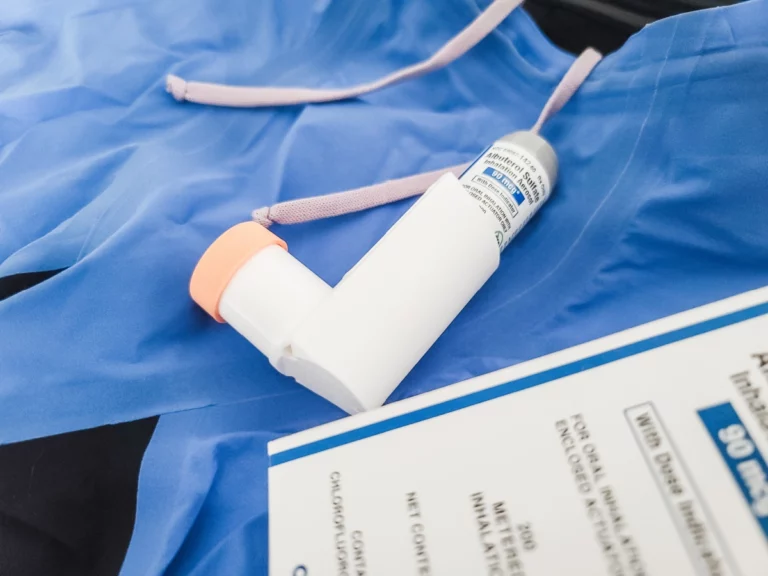
The most common asthma medication is Albuterol Sulfate. This is your standard inhaler, however, there are many other similar medications in the Beta 2 Agonist category. According to our email response from The USADA DR TEAM on May 28, 2024,
Albuterol Sulfate is listed as, “‘conditional,’ meaning it’s permitted when inhaled below the threshold. If (he) limits (his) inhalation to stay below 600mcgs in 8 hours (equaling 75 puffs), that form of Beta 2 Agonist is permitted.”
As an example, a swimmer may have an Albuterol Sulfate prescription for “2 puffs by mouth three times a day as needed,” at 90 mcg. If the swimmer uses the maximum prescription, they would inhale only 540 mcg in a 24 hour period or 180 mcg in a spaced 8-hour period. This use of the medication is allowable by USADA and is not considered performance-enhancing at this dose.
Obviously, every prescription is different, so if you are in doubt, please contact: drugreference@usada.org for clarification. The information provided here is for informational purposes only and you should consult the appropriate agencies to discuss your unique circumstance.
Because non-asthmatic swimmers can experience performance-enhancing effects from higher doses of albuterol and similar drugs, this is a banned substance and restrictions are necessary. Read the PubMed article here. However, when used appropriately, your swimmer can compete safely and without fear of repercussions from Anti-doping Agencies.
If you would like to read more about banned substances and the NCAA, click here.
